
Although the scanner market is becoming less and less in demand, mainly thanks to the all-in-one solutions that also integrate the possibility of scanning documents, there is a particular type of scanner that is still widely used today by people who they often work on the move, or who have little space for a multifunction or a traditional scanner: that of portable scanners.
There are several factors to consider when buying the best portable scanner for your needs, that’s why we thought we would help you with your choice, first of all listing the most important technical features, then moving on to the real guide to purchase.
Here we had selected the latest and advanced models of portable scanners for you.


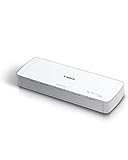


Buying Guide to Select the Best Portable Scanners
The format of the sheets supported, the presence of WiFi or a display, the resolution, or the scanning speed are just some of the technical characteristics to be evaluated before purchasing the best portable scanner for your needs.
How Many Types of Portable Scanners Are There?
Although the operating principle is practically identical, there are three types of portable scanners on the market. The Portable Scanner is structured to allow scanning of printed photographs and slides. The scanner flatbed instead, have the classic tray covered with a lid, among which we must support documents for scanning.
Finally, the sheetfed scanners are characterized by a much slimmer design and structure and require the insertion of the sheets in a sort of “trolley,” which will automatically pull the document and then scan it.
Are Resolution and Speed Important?
They are, but it depends a lot on the type of use of the portable scanner. Many scanners allow you to choose between 300 DPI, 600 DPI, and 1200 DPI. Figures that do nothing but represent the density of pixels per inch of a scan, that is, the resolution.
For a standard document, the most suitable resolution is 600 DPI, while for a photograph, it is recommended to scan at 1200 DPI. Speed is also critical. Before purchasing the best scanner for your needs, it is therefore essential to carefully evaluate the number of pages per minute that the device can scan.
What Types of Sheet Formats Must It Support?
The most important format to be supported is A4. And the A4 form is the most popular also in portable scanners. Some models also support larger sheets, those in A3 format, but are much more expensive and bulky. In short, even in the case of supported formats, the choice depends very much on your needs, but we would advise you never to go below the A4.
Battery and Memory Cards
In portable scanners, it is essential to consider two factors: the capacity of the integrated battery and the type of storage supported. Some portable scanners also do not integrate the battery and are powered directly through the connection via USB cable. Others instead have the same battery as cell phones. Still, others finally use AA batteries to work (that is, ordinary stylus batteries).
To save the scans, microSDs are generally used, which can be purchased with different storage capacities. For a portable scanner, a 16 GB microSD may also suffice but, if you want to be on the safe side, you could think of buying a 32 GB microSD.
Is WiFi Important?
It is not essential, but it is very convenient. Some of the more advanced models of WiFi scanners integrate the ability to connect to WiFi networks to transfer scans to your computer or smartphone wirelessly. This is a feature to consider if you need to transfer files very quickly.
What Are the Adf and Duplex Used For?
For the duplex, there is little to say: it is the function that allows scanners to perform automatic scans of both sides of the pages. Much more interesting is the ADF (Automatic Document Feed), which is a component that allows the scanner to load the sheets completely independently, before performing the scans.
The Presence of A Display Is Important
The display, present in some portable scanner models, is used to guarantee complete control of the device’s functions and, above all, to control the amount of memory available in the microSD that is being used. The display also allows you to change the scan resolution.
How Does It Work?
There are two types of portable scanners: the first is the one that needs to be scrolled over the whole document, the image or the page of a company manual. The second is that in which the sheet is inserted inside the device, which in this way starts the scan.
In both cases, once the image is acquired on the memory card, it will be necessary to send it to another device, which may be the computer, tablet, or smartphone. Some models allow you to do it wirelessly, and others need the connection cable.
Which One to Choose?
To choose the right model, first check if it is compatible with your Android, iOS, Linux device, etc. Then check if the scanner works only if it is powered via USB, and therefore, only if you have a PC nearby or if it has a battery, and consequently, you can use it anywhere with maximum comfort.
If you have many documents to scan, the scanning speed may be relevant to you. Another parameter to evaluate is the resolution: all scanners should allow you to adjust the DPI level, but not all have the same decision.
Better never to drop below 600 DPI. A highly appreciated feature is the presence of the small integrated display that allows you to immediately have a preview of the scanned image to understand how it came about.
Alternatives
The need to scan documents and images has significantly increased in recent years, but the scanner itself is certainly not the only tool available on the market. In addition to multifunction printers, you can turn your mobile phone into a real scanner by downloading the right applications.
There are several, and many are also free, for example, Office Lens and CamScanner. Both are good for iOS and Android. In the beginning, it may take you a few minutes to understand how it works if you are not an expert on these things, but the tutorials and online explanations are not lacking.
What needs to be done is to frame the document to be scanned and taken. It will then be the app that will automatically crop the edges and improve the image. From your mobile phone, you can then send it to a customer’s email, to a WhatsApp contact, etc.
For Slides
If you have a lovingly created slide archive over the years or if you have so many negatives and films that you don’t want to miss, you should digitize them. But in this case, you don’t need a standard model, but a slide scanner.
These devices, also suitable for professional use, scan the classic 35 mm slides; some models those of 110 mm. Even in these cases, attention must be paid to the scanning speed, resolution, and compatibility with Windows and Mac and the possibility of using them anywhere or only by connecting them to the PC.


